
IPTV vs Cable TV: Cost, Features & Which to Choose
This guide may contain affiliate links. If you buy through them we may earn a commission at no extra cost to you. As an Amazon Associate I earn from qualifying purchases. Learn more.
Lessons 2 of 5
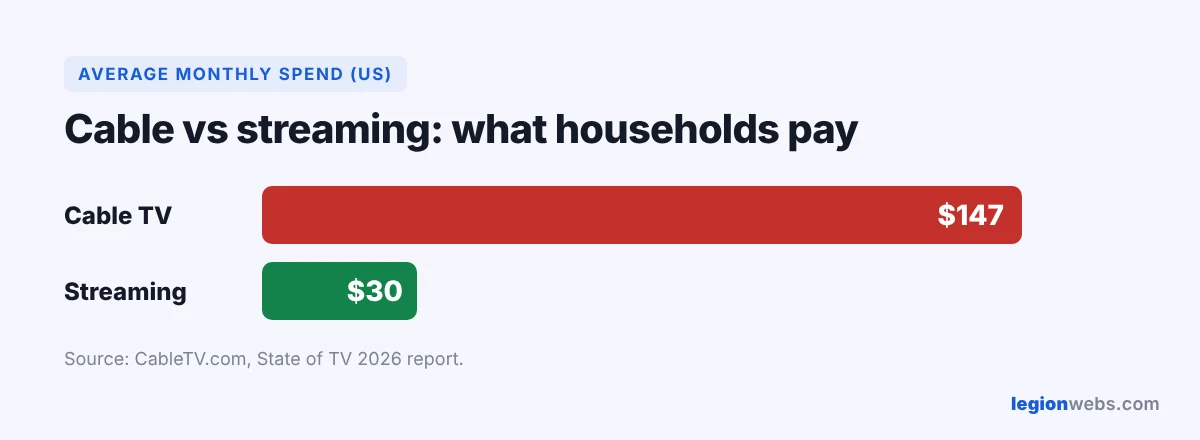
Quick Overview: IPTV vs cable TV comes down to cost, flexibility and reliability. The average US cable bill is about $147 a month, while streaming households spend around $30. IPTV usually costs far less than cable and works on any device, but it depends on your internet and on choosing a trustworthy service. This lesson compares both side by side so you can decide.
Many families now ask whether they still need cable. Cable is simple and stable, but prices keep rising and fees pile up. Meanwhile, IPTV and streaming apps deliver the same kind of channels over the internet. So which is better for you? First, let’s look at the numbers.
IPTV vs cable TV: what you really pay
According to the CableTV.com State of TV 2026 report, the average cable bill is about $147 per month, while streaming households spend around $30 per month. In addition, cable often adds box rental, broadcast and regional sports fees.
| Cost item | Cable TV | IPTV |
|---|---|---|
| Monthly price | About $147 on average | Usually a fraction of cable; varies by service |
| Equipment | Rented box, monthly fee | Your own stick or smart TV, bought once |
| Installation | Often a visit and a fee | Set up yourself in minutes |
| Contract | Often 12–24 months | Usually monthly, no contract |
| Extra TVs | Extra box per room | Depends on the connections in your plan |
For example, a family paying $147 a month for cable spends over $1,700 a year. Switching to IPTV or streaming apps can cut that by more than half, even after buying a streaming stick for each TV.
Features compared
| Feature | Cable TV | IPTV |
|---|---|---|
| Where you watch | TVs with a cable box | Any TV, phone, tablet or laptop |
| TV guide | Built in | In the player app (EPG) |
| Catch-up and on demand | Limited, depends on package | Often included |
| Reliability | Very stable | Depends on your internet and the service |
| Setup | Technician installs it | You install an app |
When cable TV is still the better choice
- Your internet is slow or often drops out.
- Someone at home wants a TV that “just works” with no apps.
- Your cable package is bundled with internet at a price that is hard to beat.
When IPTV is the better choice over cable
- You have a steady connection of 15 Mbps or more per TV.
- You want to watch on several devices, including phones and laptops.
- You are happy to spend 15 minutes setting up an app.
- You want to stop paying for channels you never watch.
How to switch from cable to IPTV
- First, test your internet speed on the TV you will use.
- Then pick a device; for most people a Fire TV Stick 4K Max is the easiest start.
- Choose a licensed service using our IPTV service checklist, and use a free trial first.
- Install a player and add your login, following IPTV on Firestick.
- Finally, run both for a week, then cancel cable once you are happy.
Good to know: only use services that have the rights to the channels they offer. A suspiciously cheap service with every premium channel is usually not licensed, and it can stop working at any time.
To compare costs, look at how IPTV plans are priced per month and per year, for example on 8K IPTV Group’s pricing page, and set that against your current cable bill.
Frequently Asked Questions
Is IPTV cheaper than cable TV?
In most cases, yes. Cable averages about $147 a month, while IPTV and streaming plans usually cost much less, with no box rental or contract.
Is the picture quality as good as cable?
It can be better, with many channels in full HD or 4K. However, it depends on your internet speed and on the service.
Can I keep my internet and cancel only the TV part?
Usually yes. Ask your provider for an internet-only plan, and check whether the bundle discount disappears.
What’s next
Now that you have compared IPTV vs cable TV, learn how to choose an IPTV service, or test one with a free IPTV trial. New to the topic? Start with What Is IPTV?