
How to Choose a Web Hosting Provider: 8-Point Checklist
This guide may contain affiliate links. If you buy through them we may earn a commission at no extra cost to you. As an Amazon Associate I earn from qualifying purchases. Learn more.
Lessons 8 of 10
Quick Overview: To choose a web hosting provider, compare eight things: uptime, speed, support, security, renewal price, how many websites you can host, backups and room to grow. This lesson turns them into a checklist, explains what 99.9% uptime really means, and shows why free hosting is rarely worth it.
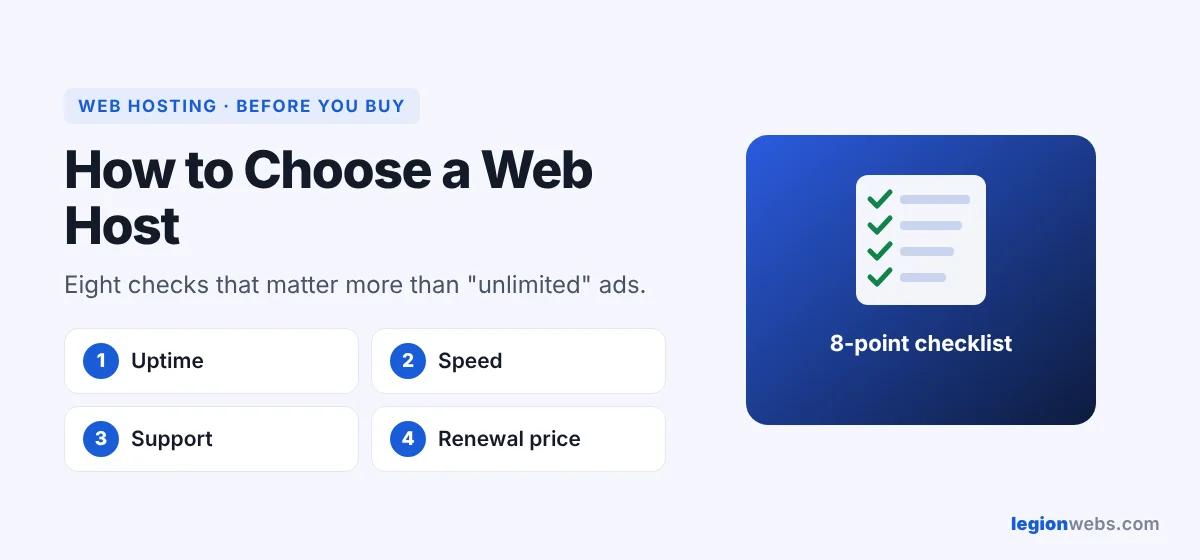
Hosting ads all promise “unlimited”, “blazing fast” and “best support”. Unfortunately, those words say little. Instead, compare hosts on things you can check. The checklist below helps you choose a web hosting provider that fits your site today and still works when it grows.
How to choose a web hosting provider: 8 checks
| # | Check | What good looks like |
|---|---|---|
| 1 | Uptime guarantee | 99.9% or higher, in writing |
| 2 | Speed | Modern servers, caching, a data center near your visitors |
| 3 | Support | 24/7 live chat that solves problems |
| 4 | Security | Free SSL, malware scanning, automatic updates |
| 5 | Renewal price | Clear renewal cost, not only the first-term deal |
| 6 | Number of websites | Enough sites on one plan for your plans |
| 7 | Backups | Automatic backups you can restore yourself |
| 8 | Room to grow | Easy upgrade to bigger plans or cloud |
Uptime: the first thing to check when you choose a web hosting provider
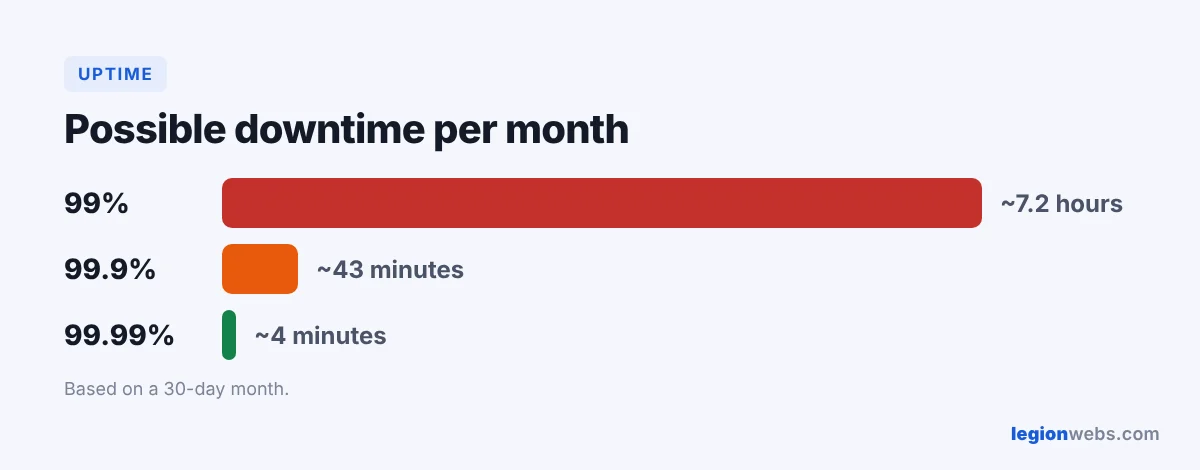
Uptime is the share of time your site is online. It sounds like small differences, yet they add up over a month:
| Uptime | Possible downtime per 30-day month |
|---|---|
| 99% | About 7.2 hours |
| 99.9% | About 43 minutes |
| 99.99% | About 4 minutes |
How much does web hosting cost?
To start with, shared hosting is the cheapest, often a few dollars a month on a long first term. Meanwhile, VPS and cloud plans cost more, and dedicated servers cost the most. However, the first-term price is usually a discount. Therefore, always check the renewal price and the length of the term before you pay, because that is what you pay from year two.
Is free web hosting worth it?
- Limits: first, little storage, slow servers and often no custom domain.
- Ads: also, many free hosts show their own ads on your site.
- Trust: finally, visitors and search engines take free subdomains less seriously.
Free hosting is fine for a test. For a real blog or business, though, a low-cost paid plan is a much better start.
Can you host multiple websites on one account?
Yes, on most plans above the entry level. In that case, each site gets its own domain and folder, and you manage them from one dashboard. However, check the “number of websites” on the plan before you buy, because the cheapest plans often allow only one.
Which web hosting provider to choose as a beginner
For new WordPress sites we use and recommend Hostinger. In addition, it includes free SSL, one-click WordPress, an easy control panel (hPanel) and plans that host several websites. As always, compare the renewal price with other hosts before you decide.
Frequently Asked Questions
What is the most important thing when you choose a web hosting provider?
Above all, reliability: high uptime and support that actually fixes problems. After all, a cheap host that goes down often costs you visitors and sales.
Should I pay for several years up front?
Longer terms usually cost less per month. Still, check the refund policy and test the host first, ideally with a money-back guarantee.
Does the data center location matter?
Yes, because a server close to your visitors loads pages faster. So pick a location near your main audience.
For a neutral explanation of availability figures, see high availability on Wikipedia.
What’s next
Once you choose a web hosting provider, learn your way around its dashboard in cPanel vs hPanel, then start your WordPress blog.
We recommend Hostinger for beginners: affordable plans, free SSL, one-click WordPress install and 24/7 support.
Get started with Hostinger →